 For businesses in Bulgaria
Regulatory changes · AI-assisted analysis
Implementation Regulation: Anti-Dumping Duty on Pea Protein Imports from China
Updated: 02.11.2026
Official source: EUR-Lex · Official Journal of the EU ↗
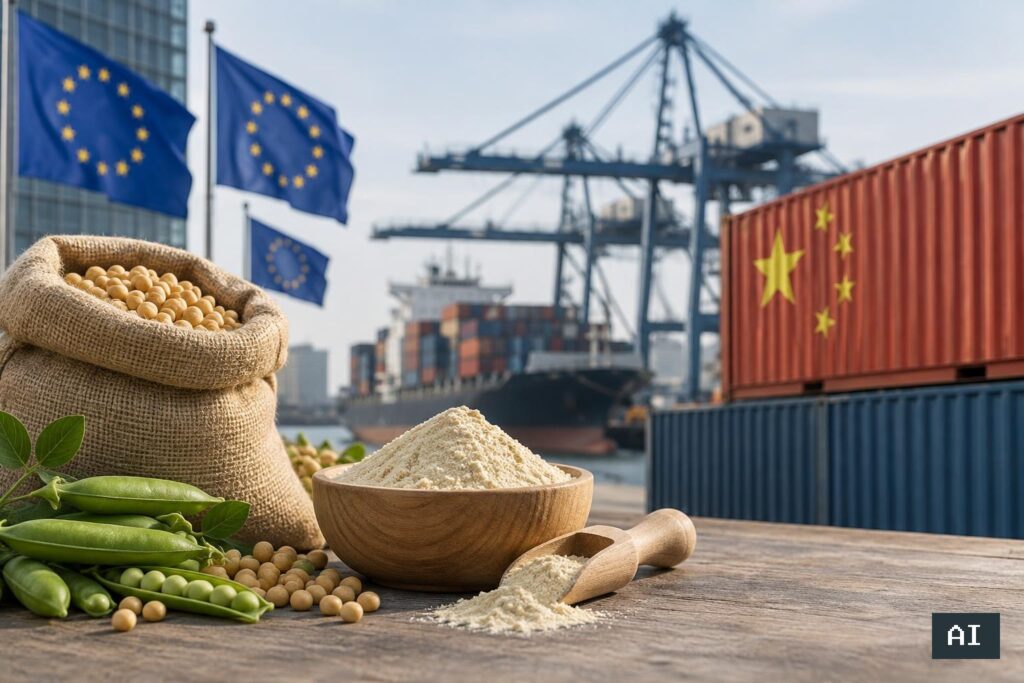
On September 25, 2026, a regulation by the European Commission came into effect to impose a definitive anti-dumping duty on imports of pea protein from China. This action addresses detected dumping practices affecting the EU market. The procedure began with a complaint from the Union of Pea Protein Producers. After a thorough investigation, the Commission took measures to protect the European industry.
What changes
The regulation imposes a definitive anti-dumping duty on pea protein imports, replacing the earlier provisional duty imposed in 2026. The goal is to protect EU industry by preventing further harm from identified Chinese dumping imports. The duty rates vary based on the activities of different Chinese companies. Key indicators leading to this decision include dumping margins and adverse conditions for the EU industry that can no longer be ignored.
Who is affected
Affected parties include producers and exporters of pea protein in China, importers and distributors in the EU, as well as the Union's industry itself. Key examples are companies like Yantai Shuangta Food Co., Ltd., which are subject to specific duties. European farmers and pea protein value chains will be protected, while users such as Huel GmbH will see slightly increased production costs but minimal impact on final prices.
Dates and deadlines
The investigation procedure started on August 29, 2025, and went through the registration and provisional measures in 2026. The final regulation imposing anti-dumping tariffs was adopted on September 24, 2026, and takes effect the following day, September 25, 2026.
Practical next steps
Business operators should promptly review supply chains and seek alternative pea protein sources if their main supplier was from China. Anti-circumvention measures should be strengthened, and importers must comply with the new duty rates to avoid penalties.
What to check for your situation
The regulation aims to be fair to all affected parties, ensuring EU industry protection against dumping. Attempts by affected Chinese companies to circumvent the measures through changes in trading schemes are also covered by the regulation.